PROGRAMMABLE ASSEMBLY FOR DISASSEMBLY


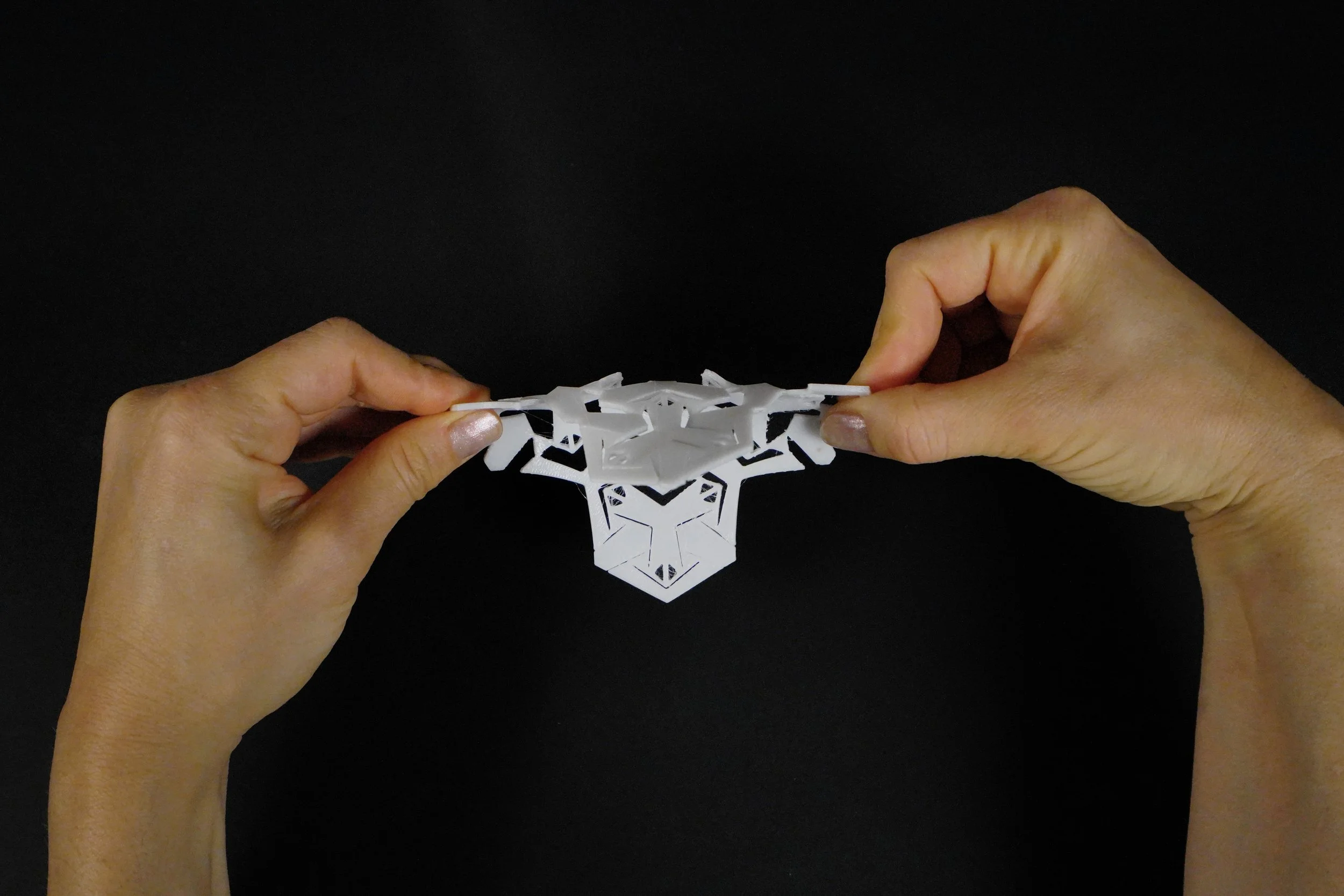
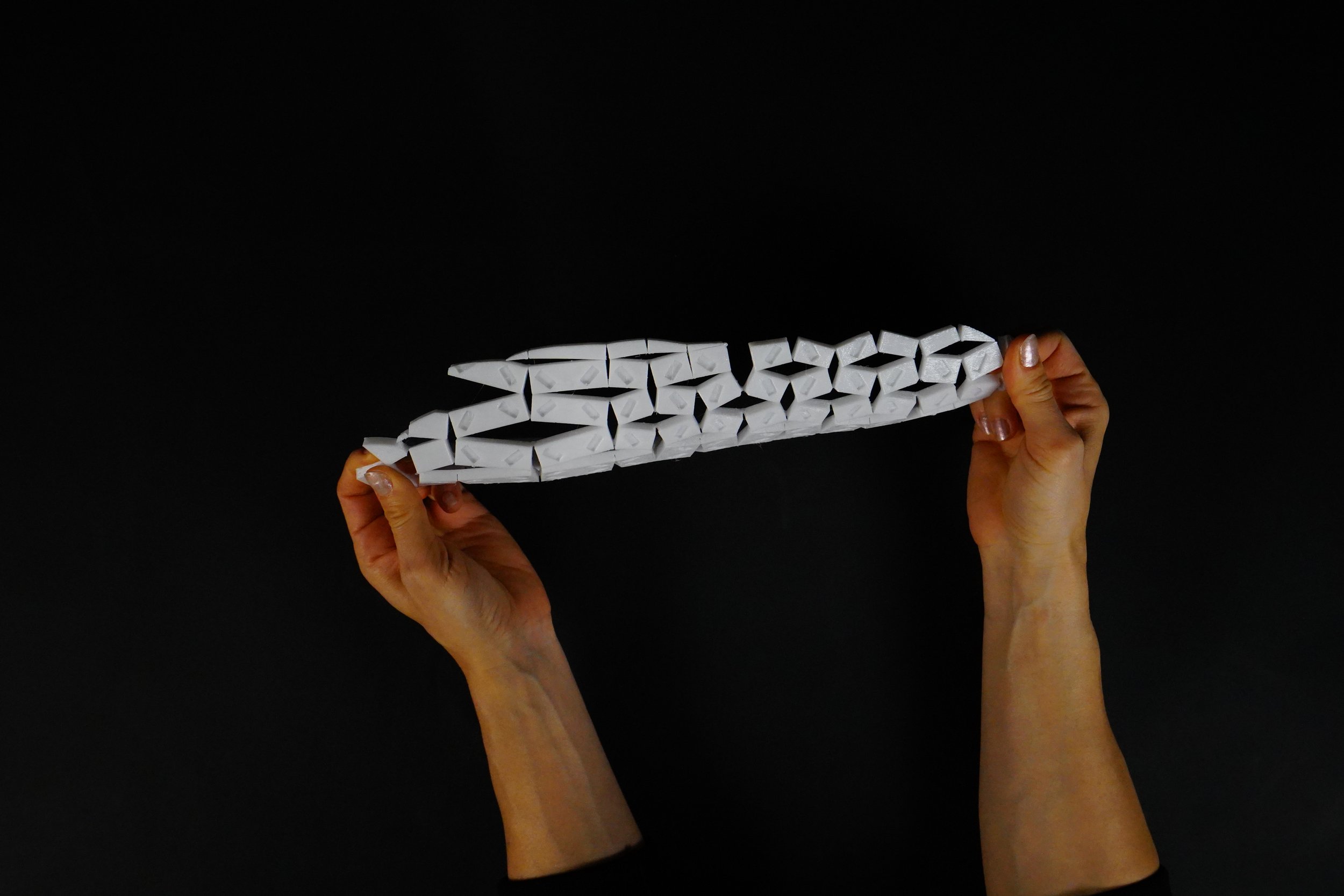
Programmable Assembly for Disassembly, develops interfaces that allow multi-material assemblies to separate on command. The research classifies disassembly strategies into six categories: mechanical, chemical, structural, magnetic, and biological. This taxonomy combines existing and novel approaches. The goal is to make composite systems recyclable and reusable, addressing the problem that many multi-material products end up in landfills because their components cannot be separated.
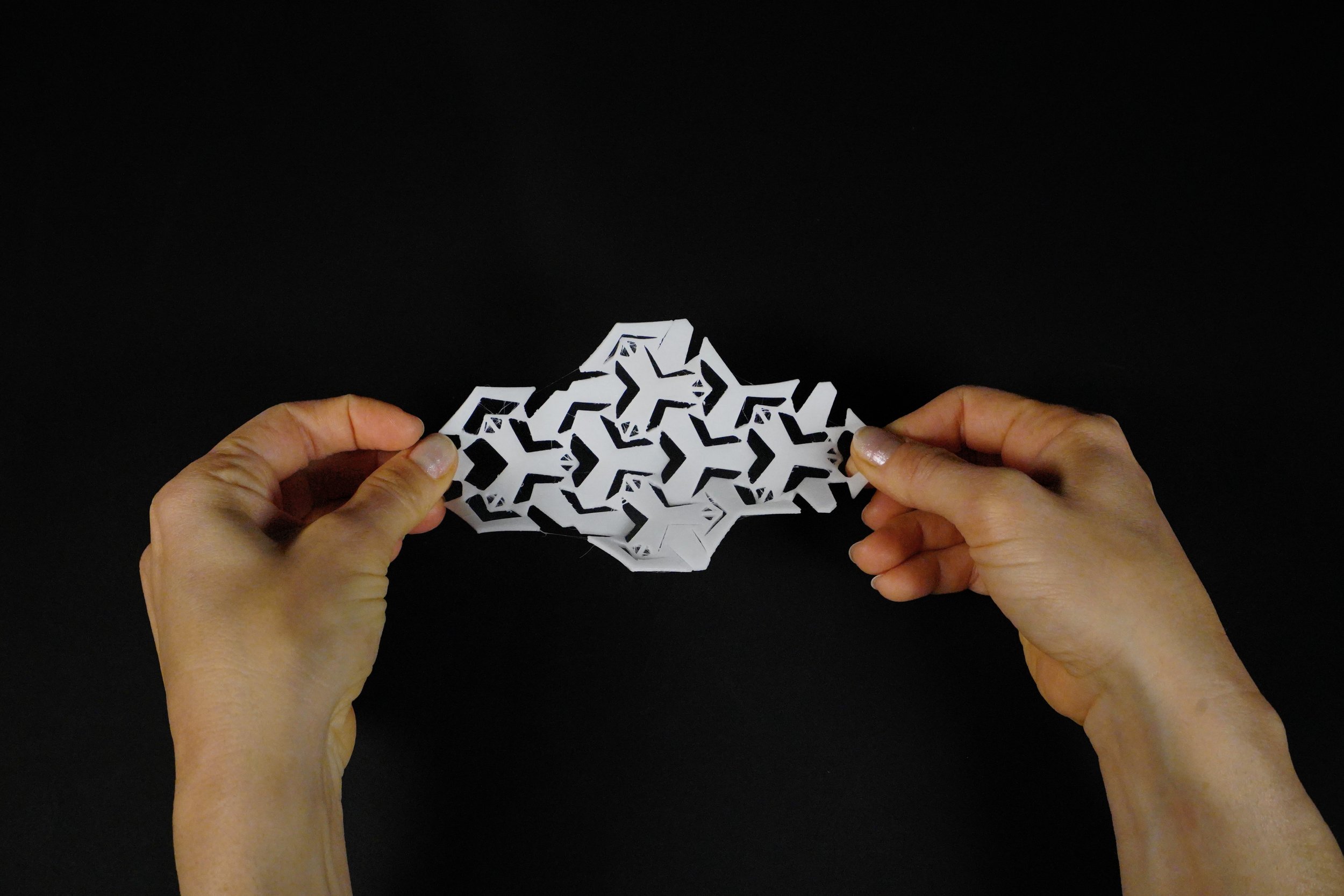
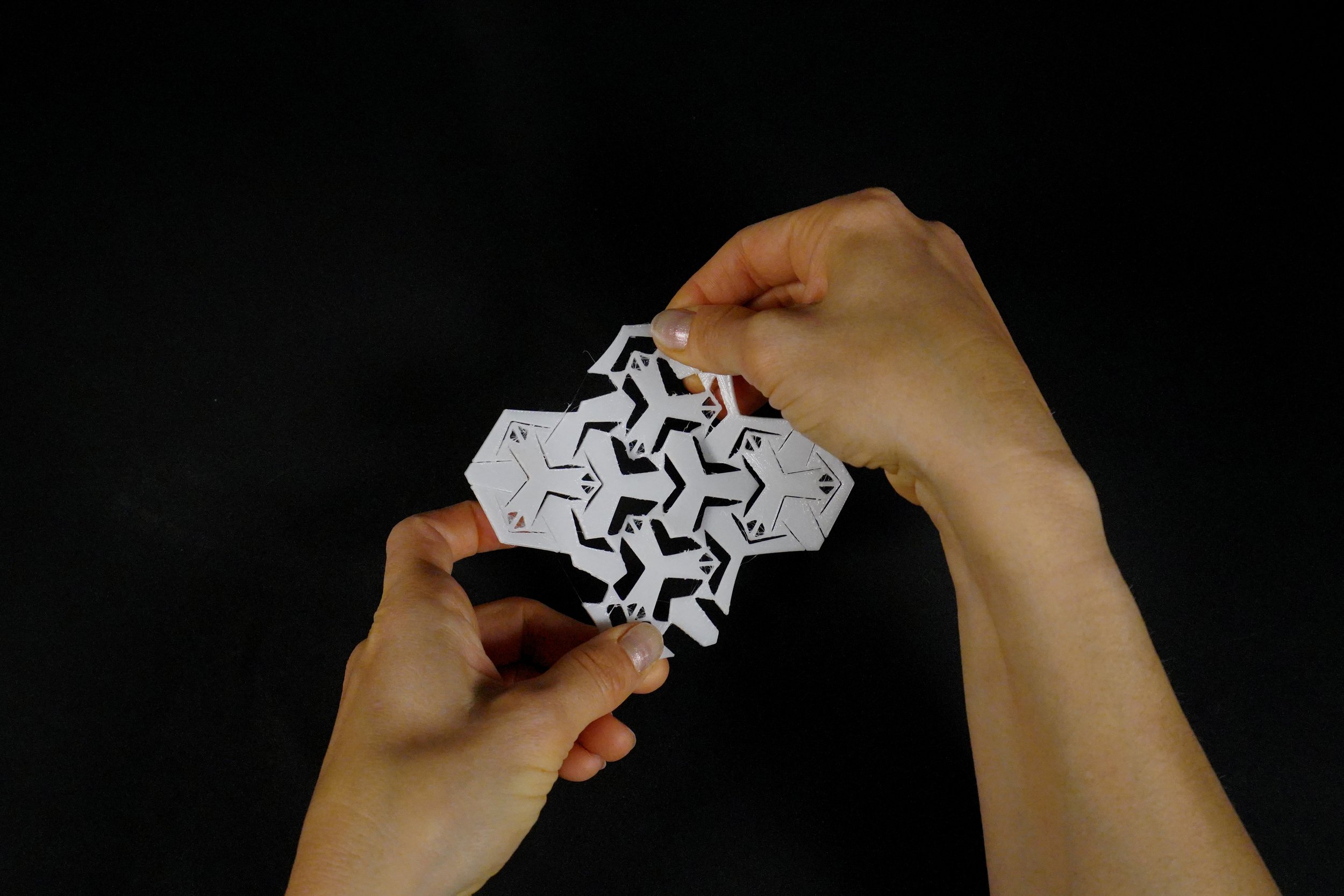
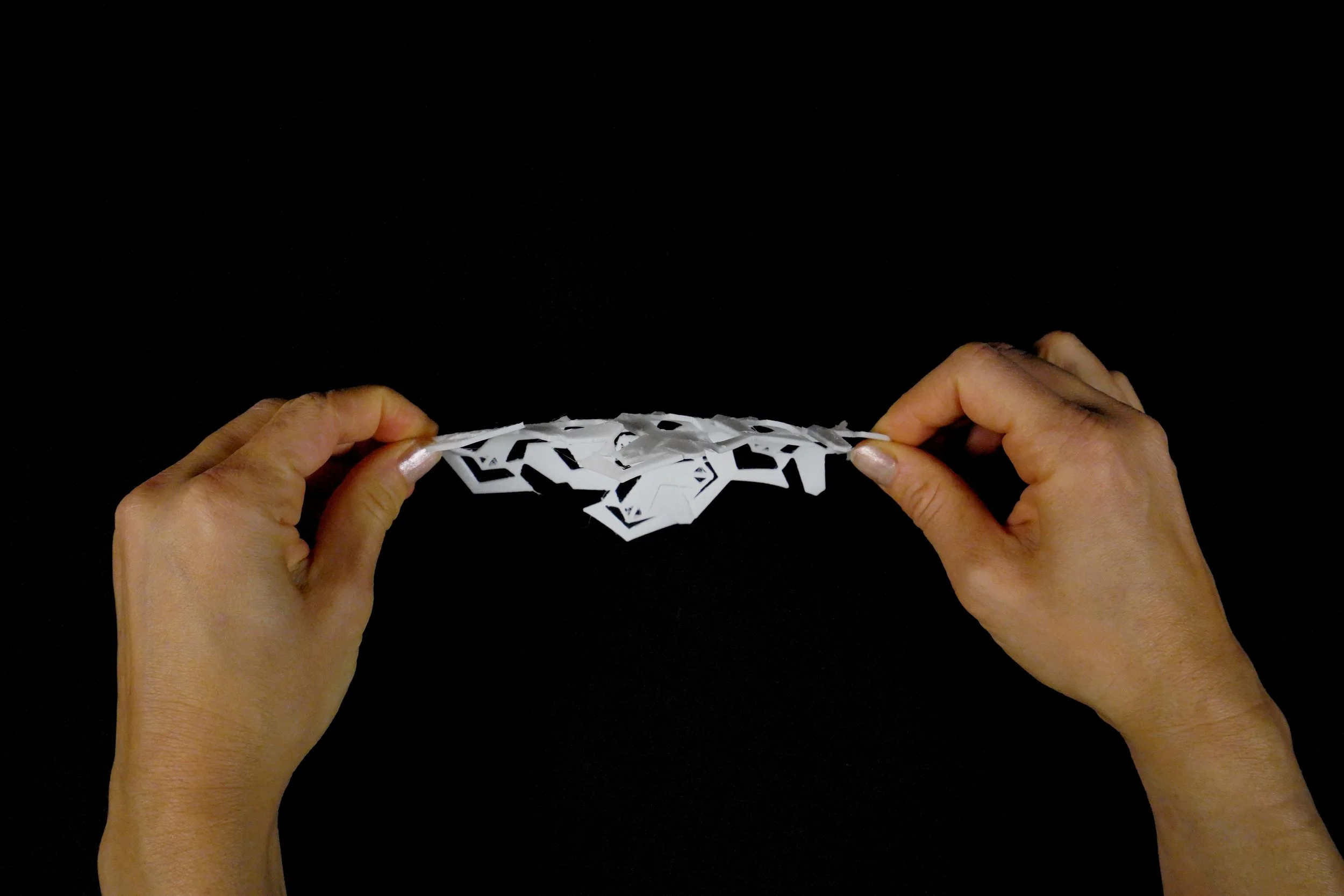
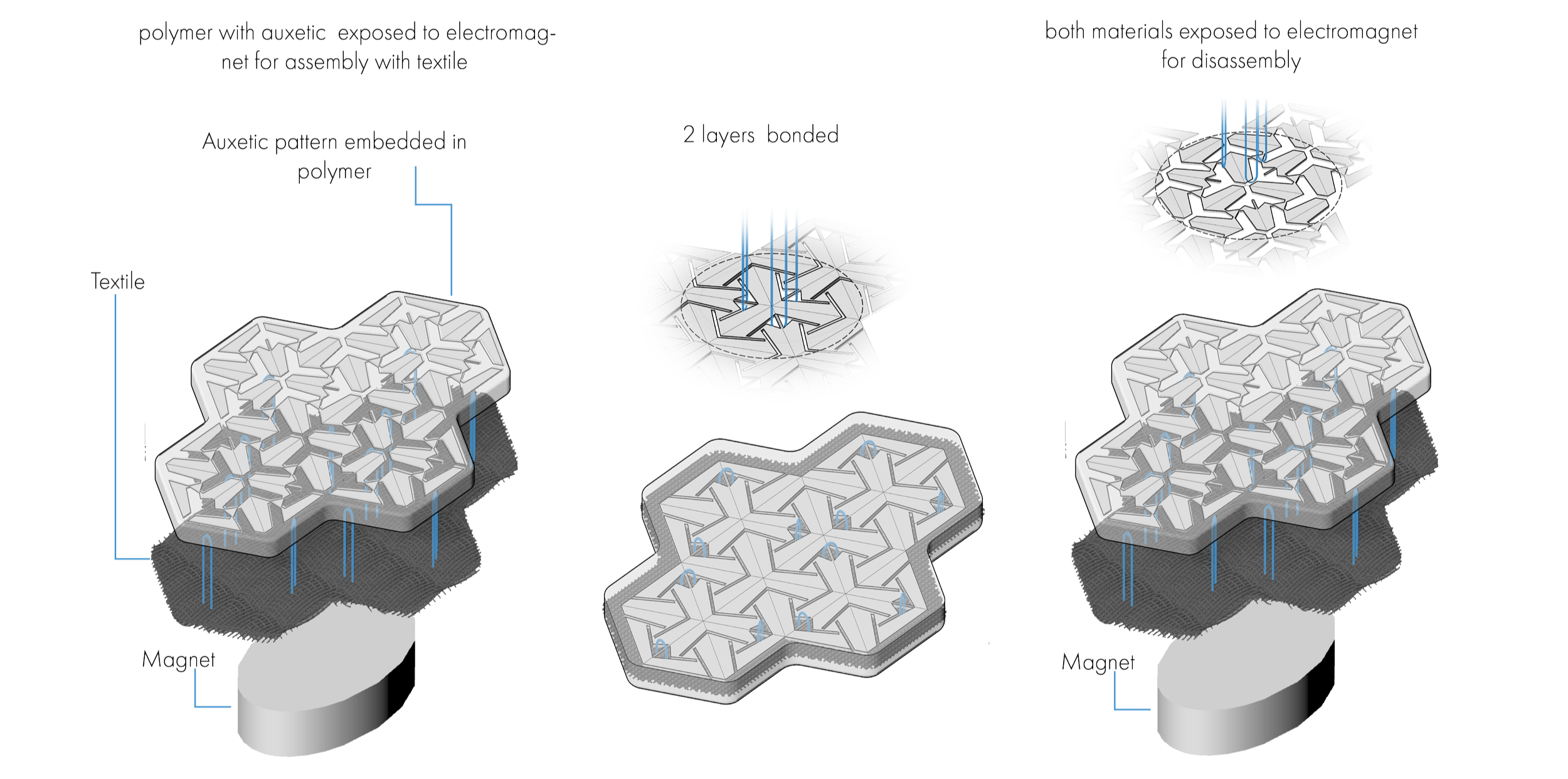
As a first step, I am working on magnetized auxetic geometries (structures that expand laterally when stretched horizontally) to create disassemblable joints. By varying the cell sizes of the auxetic patterns, I can generate adaptive, doubly curved surfaces that conform to complex geometries. The method involves casting a mixture of semi-soft polymers and initially unmagnetized NdFeB particles into auxetic geometries. These particles can be magnetized using external electromagnets and subsequently behave as permanent magnets. By controlling the direction of magnetization, I can program the auxetic geometries to respond to targeted magnetic fields. This work on magnetized auxetic structures builds on research from MIT and Stanford on reprogrammable magnetic activation methods used in medical micro robotics. My research scales up these prior experiments to serve as reversible joinery interfaces for multi-material assemblies—strong enough to remain stable under normal use, yet releasable when exposed to specific magnetic field patterns.
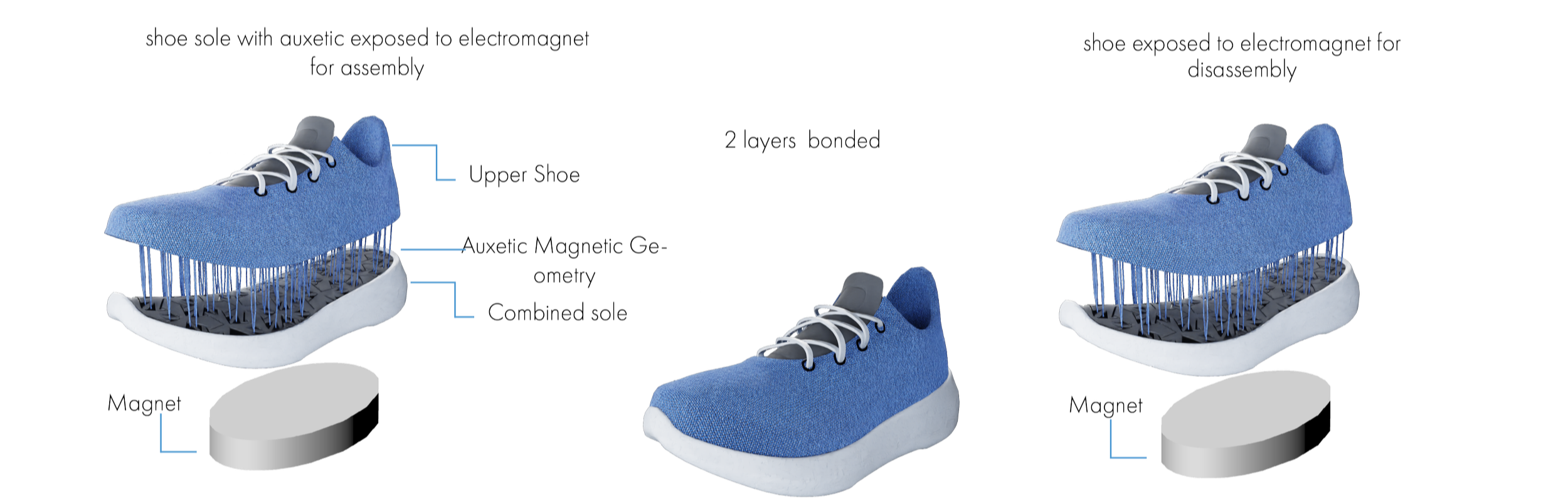
My first case study focuses on shoes, a major contributor to landfill waste, and exemplifies broader issues in textile assemblies, where components are often glued or stapled together, preventing disassembly and recycling. To address this, I explored a range of auxetic presentation geometries and developed a parametric workflow tailoring them as a joinery interface between knit textiles and the shoe sole.
In the future, I envision these disassembly methods being applicable to products well beyond the shoe case study. I aim to develop a computational design framework that integrates both assembly and disassembly as core design parameters, enabling reversible joints and separation mechanisms to be embedded within CAD workflows, allowing designers to prioritize circularity. While magnetic disassembly will not apply to all products, this case study represents one method within a broader taxonomy of disassembly strategies. Fully developing this taxonomy could reveal a set of broadly applicable methods for many products. Ultimately, this work reframes fabrication by accounting for both assembly and disassembly at the beginning of the design process, pairing programmable materials with computational tools to support circular, adaptable systems.
MAGNETIC ASSEMBLY & DISASSEMBLY FOR TEXTILES WITH POLYMERS
GEOMETRY EXPLORATION FOR INTERFACE
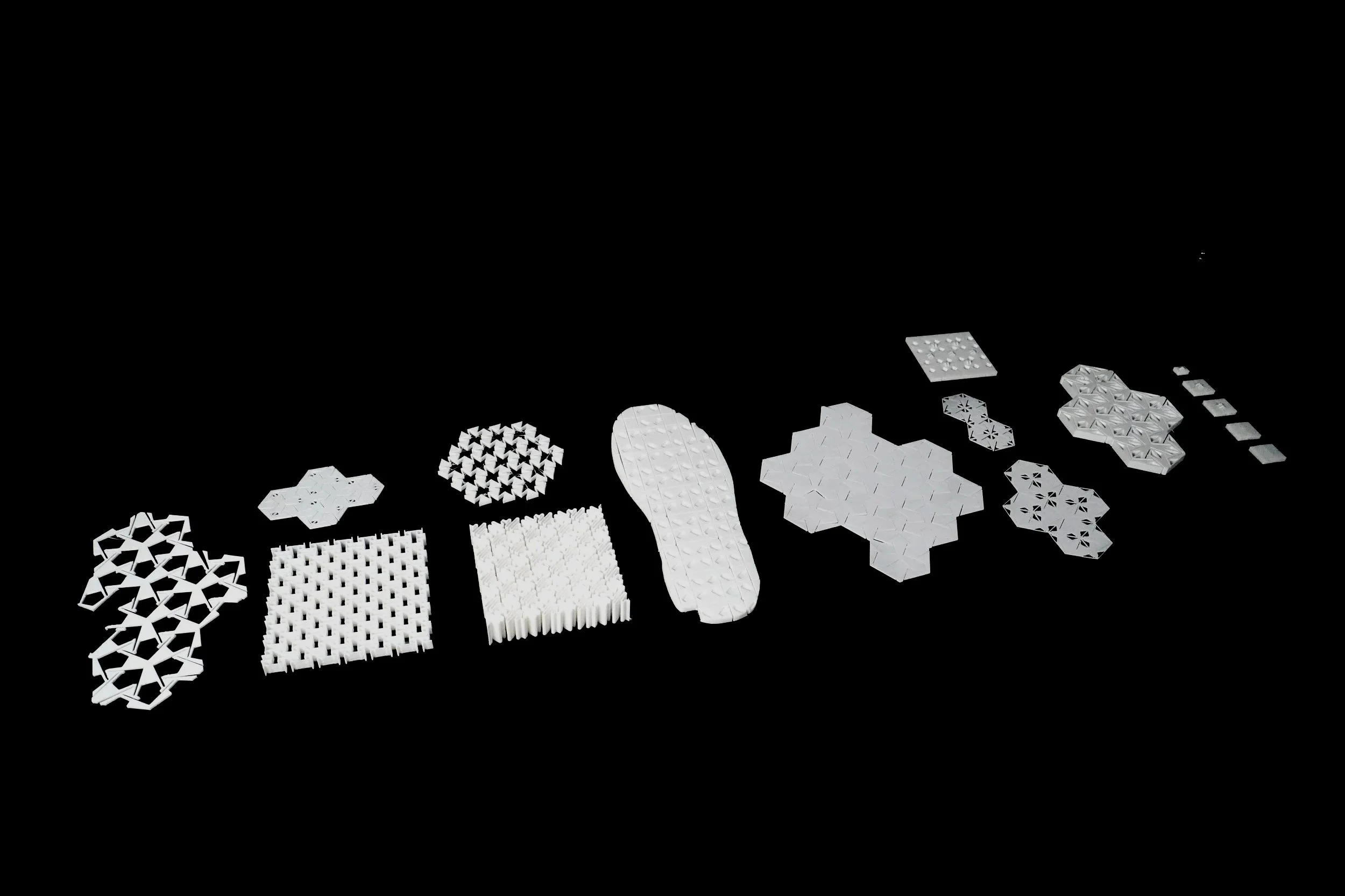
ASSEMBLY TESTS
Tests conducted for material assembly strategies between 3D prints and textiles.
MAGNET TESTS
The following magnet experiments were conducted using permanent magnets of equal strength embedded within 3D-printed structures.
ASSEMBLY AND DISASSEMBLY SYSTEM
CASE STUDIES
OTHER APPLICATIONS
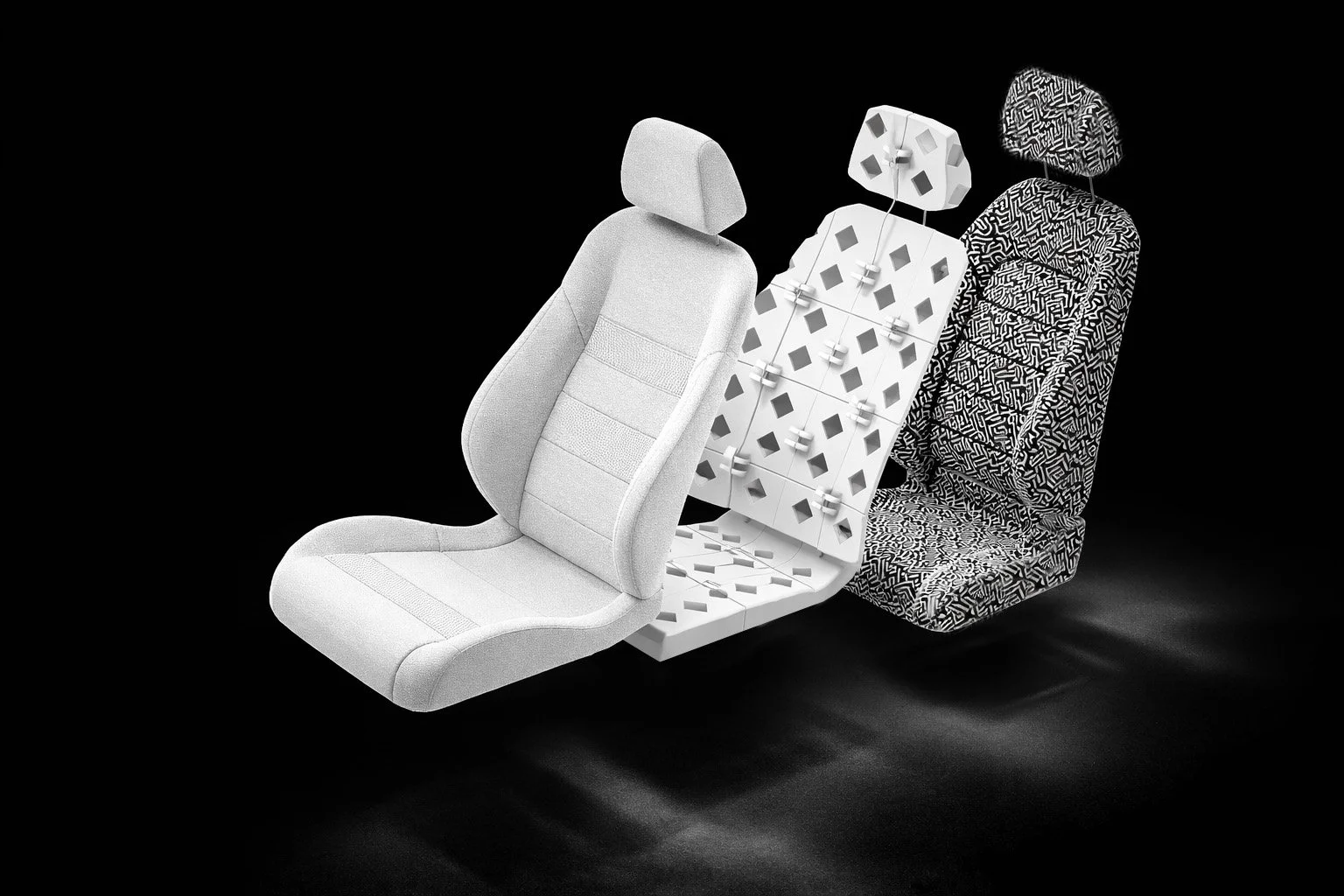
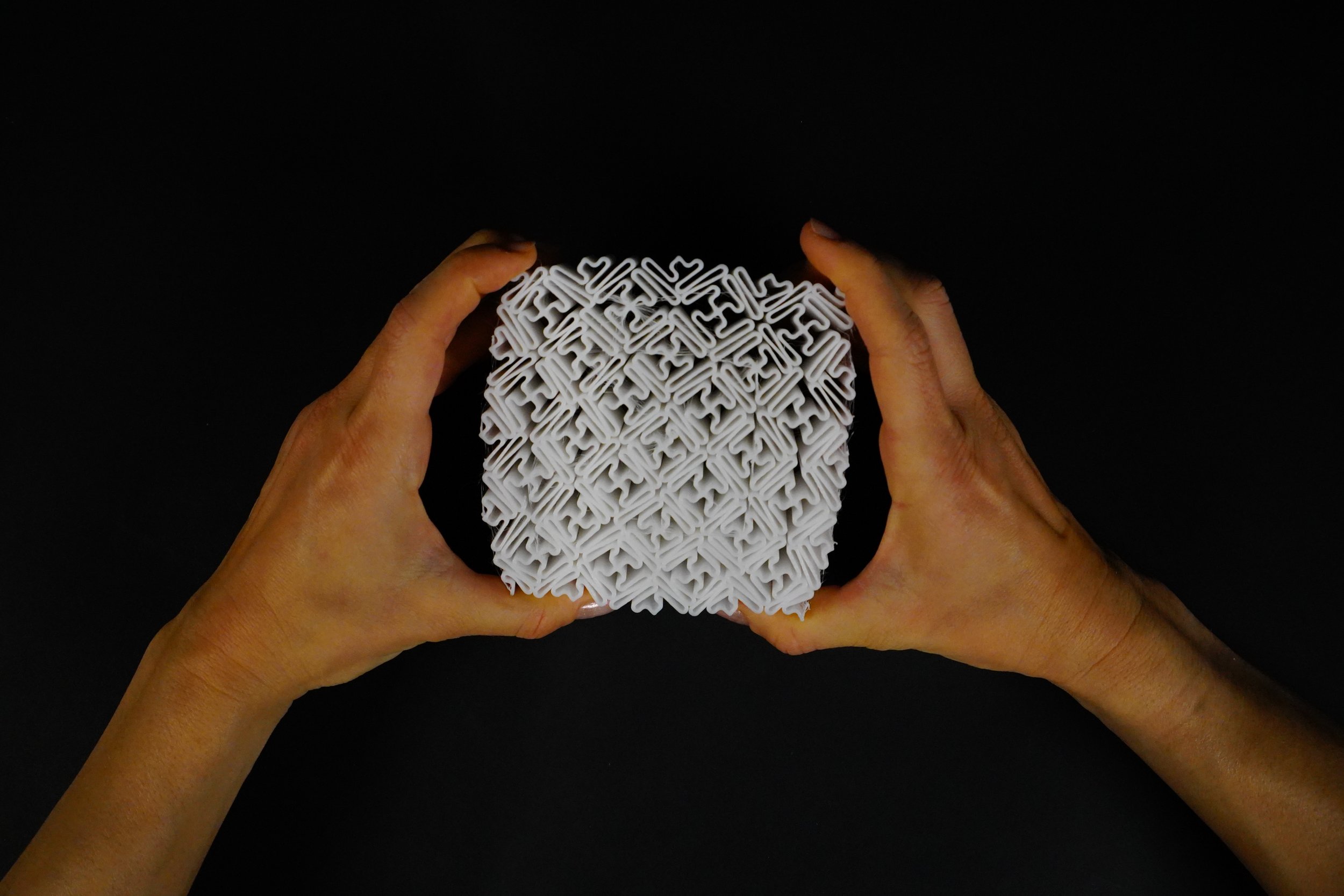
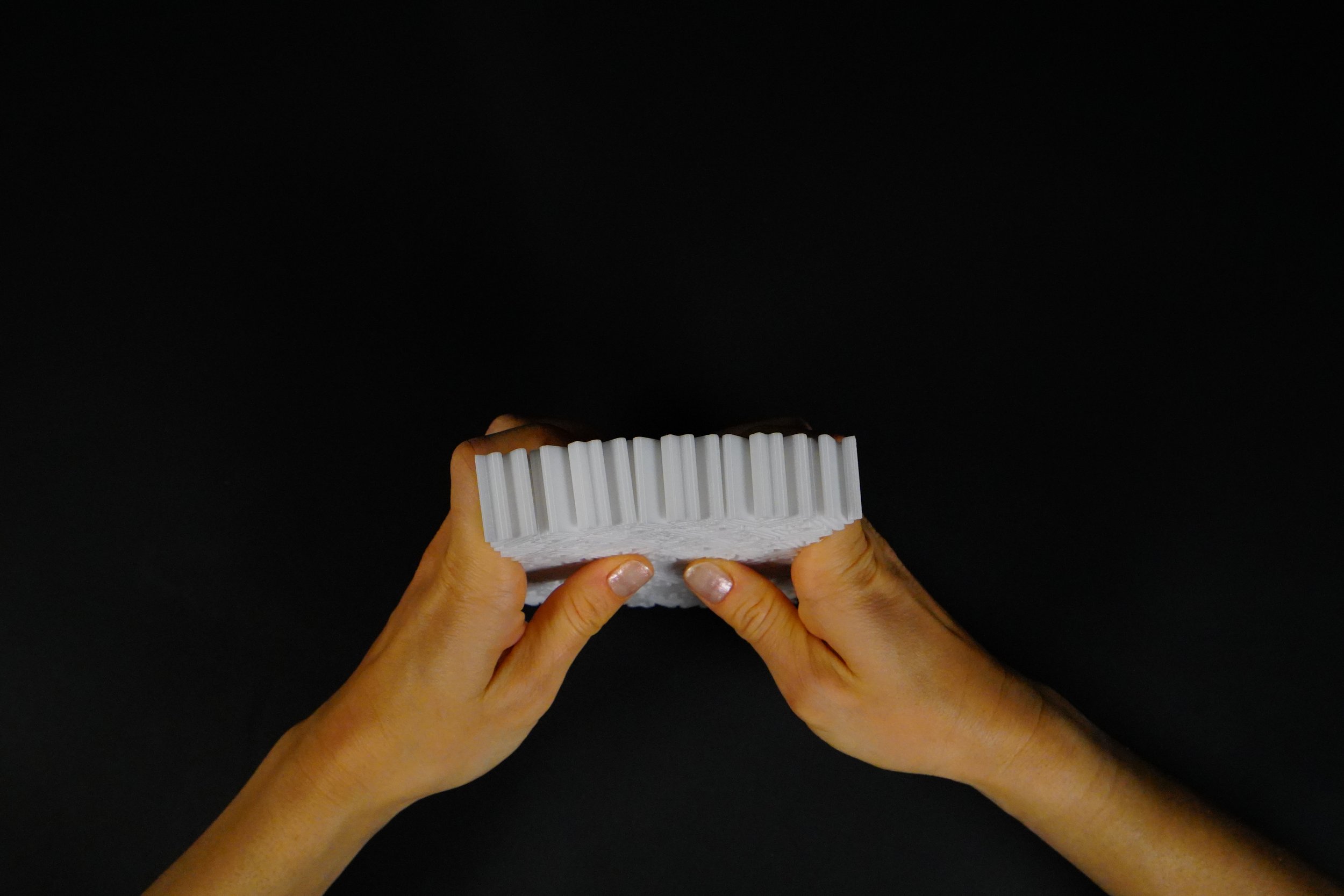
Other applications of this technology include furniture joints and car seats. The image below shows 2 different auxetic structures that could be used both for cushioning and a connection interface between cushioning and fabric.