PROGRAMMABLE MATERIALS FOR REVERSIBLE ASSEMBLY
Currently, only 6.9 %of materials in the world are recycled. The remaining 93.1 % goes to landfill.
Multi-material products cannot be easily sorted because the process is too labor-intensive and expensive, so they end up in the landfill.
What if assembly and disassembly were designed computationally from the start of the design process, allowing multi-material products that end up in the landfill to be recycled?
Currently, we are exploring how to use smart, programmable materials for disassembly. The process starts at the beginning, in the design software, where we consider how to design for disassembly both geometrically and materially. In order to develop interfaces that allow multi-material assemblies to separate on command, we use computational tools, AI, and various fabrication methods. The goal is to make composite systems recyclable and reusable, addressing the problem that many multi-material products end up in landfills because their components cannot be easily separated.
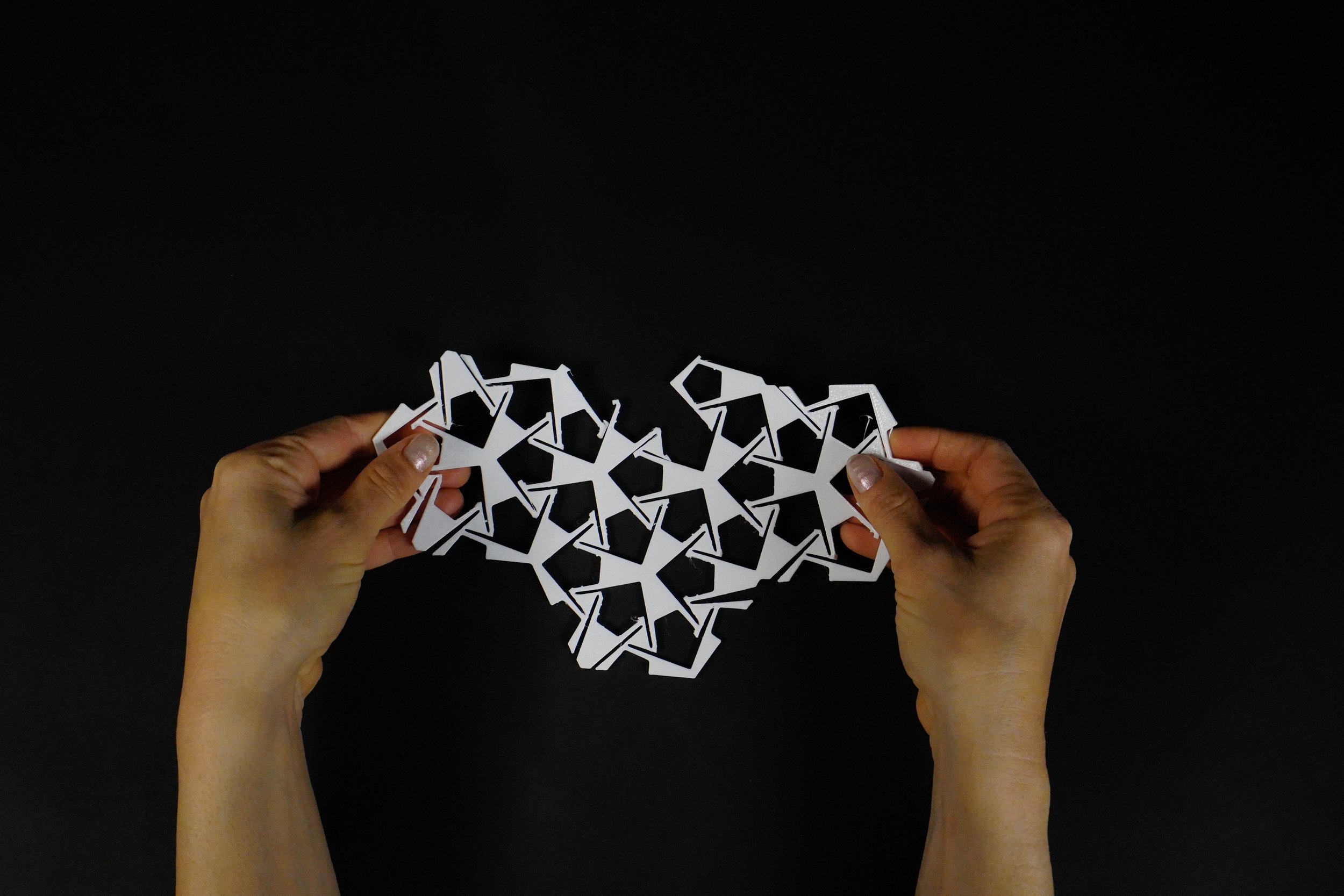
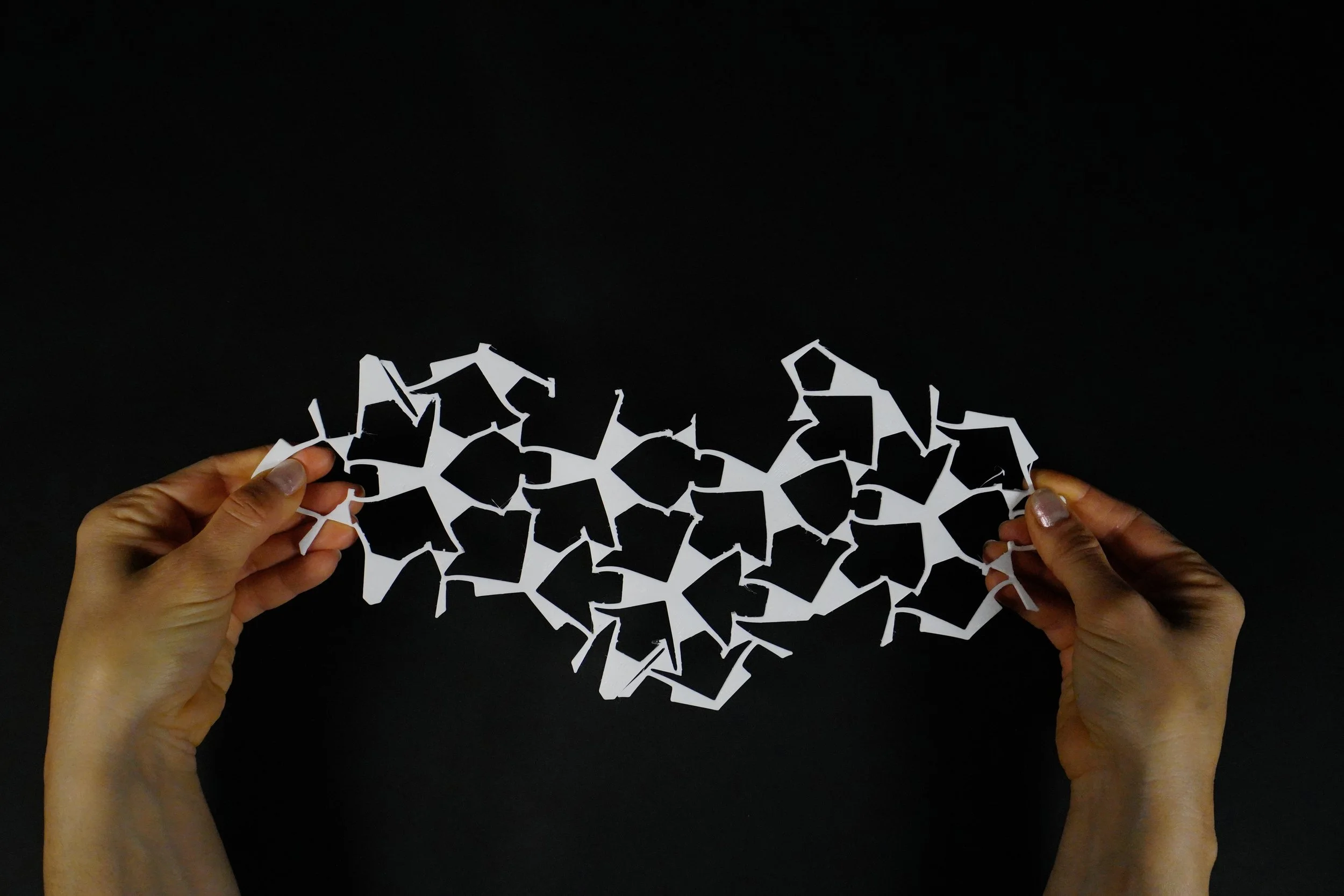
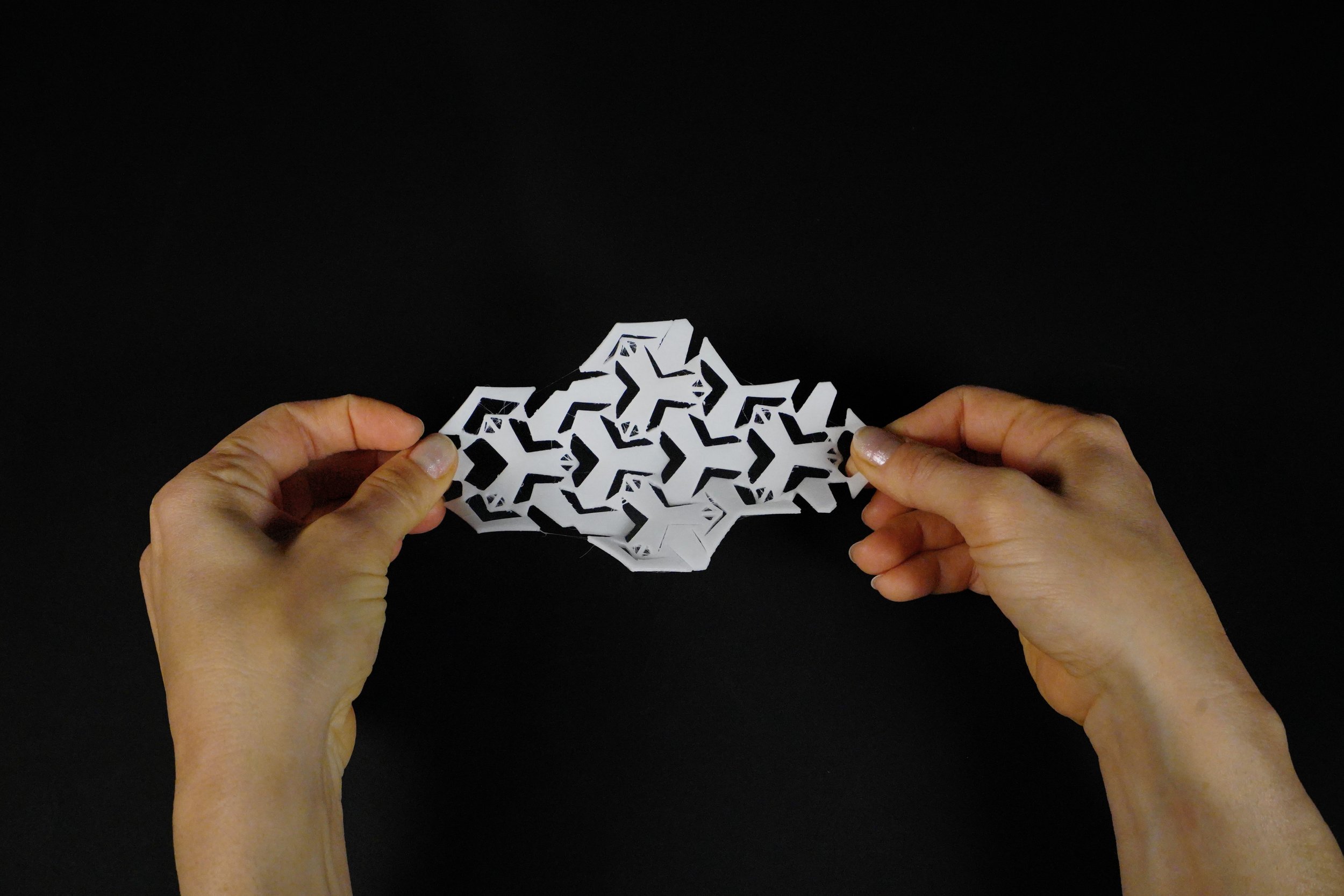
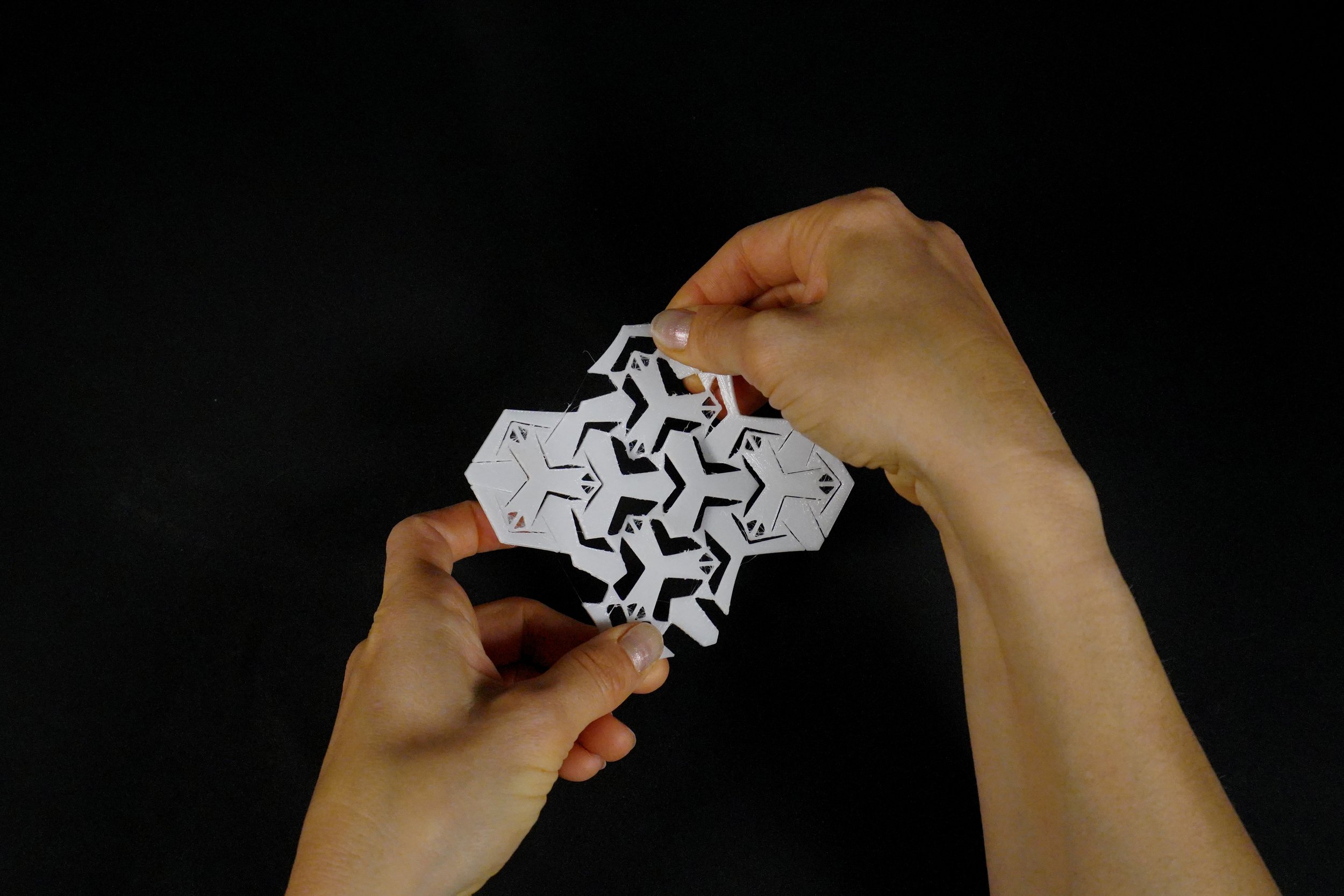
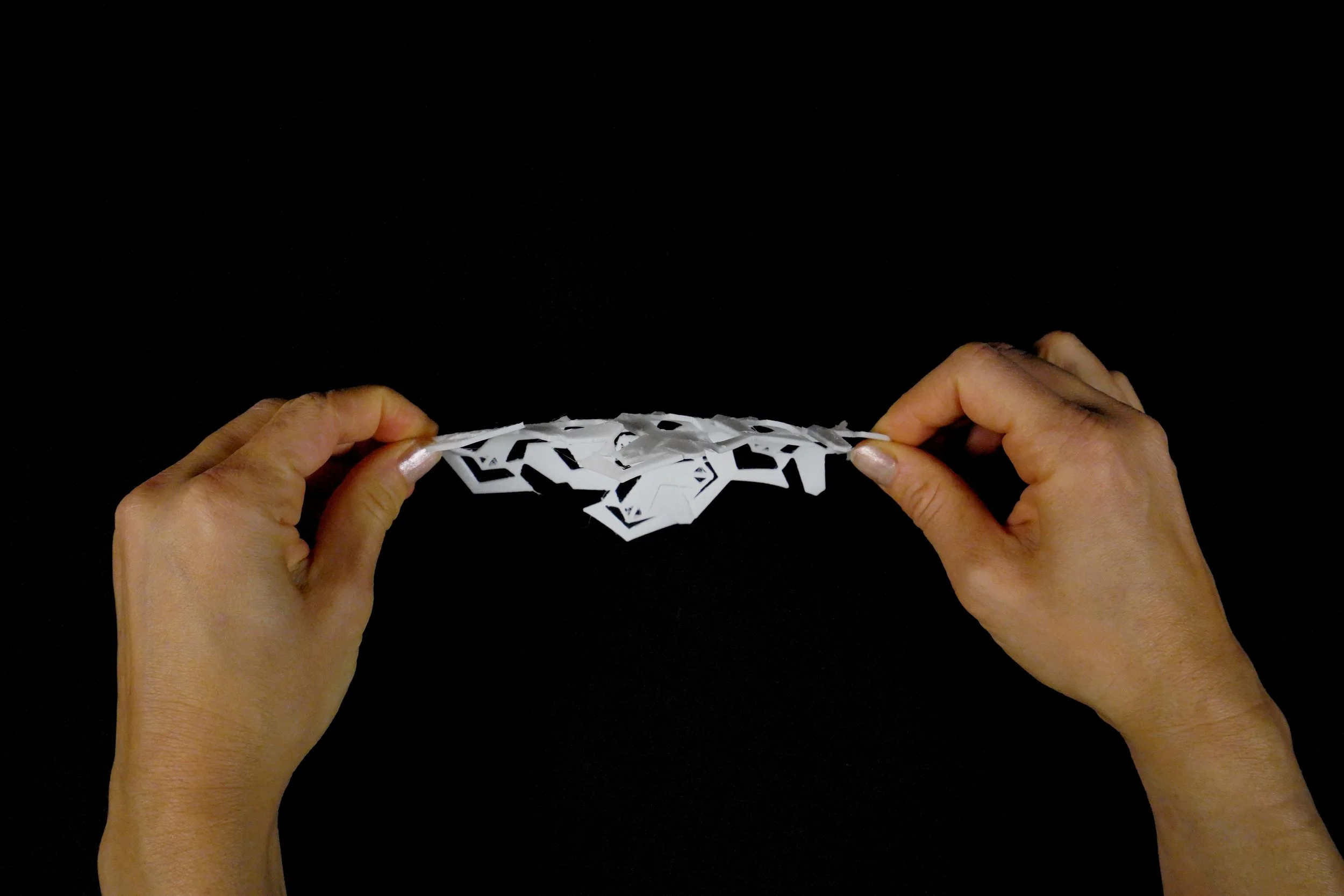
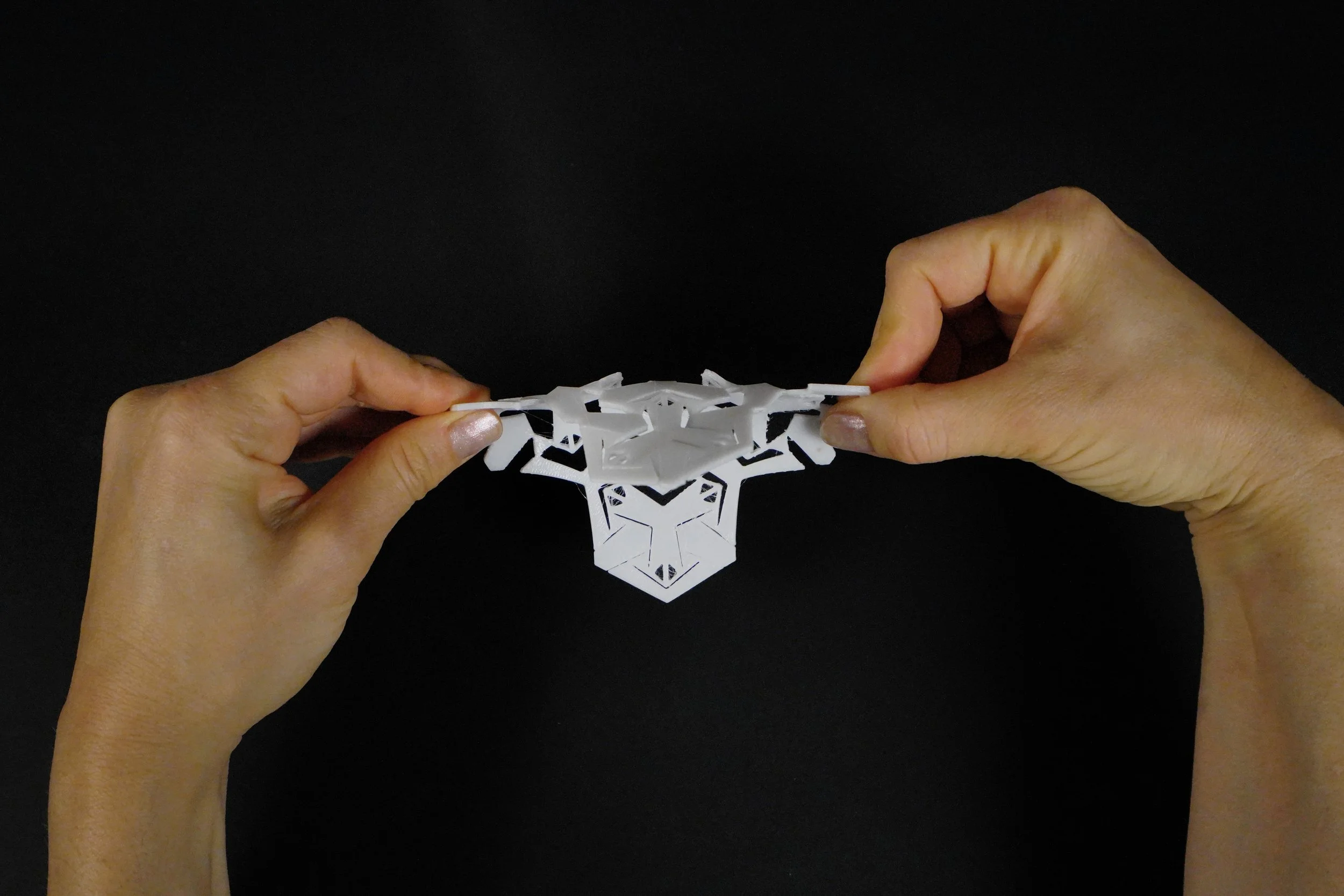
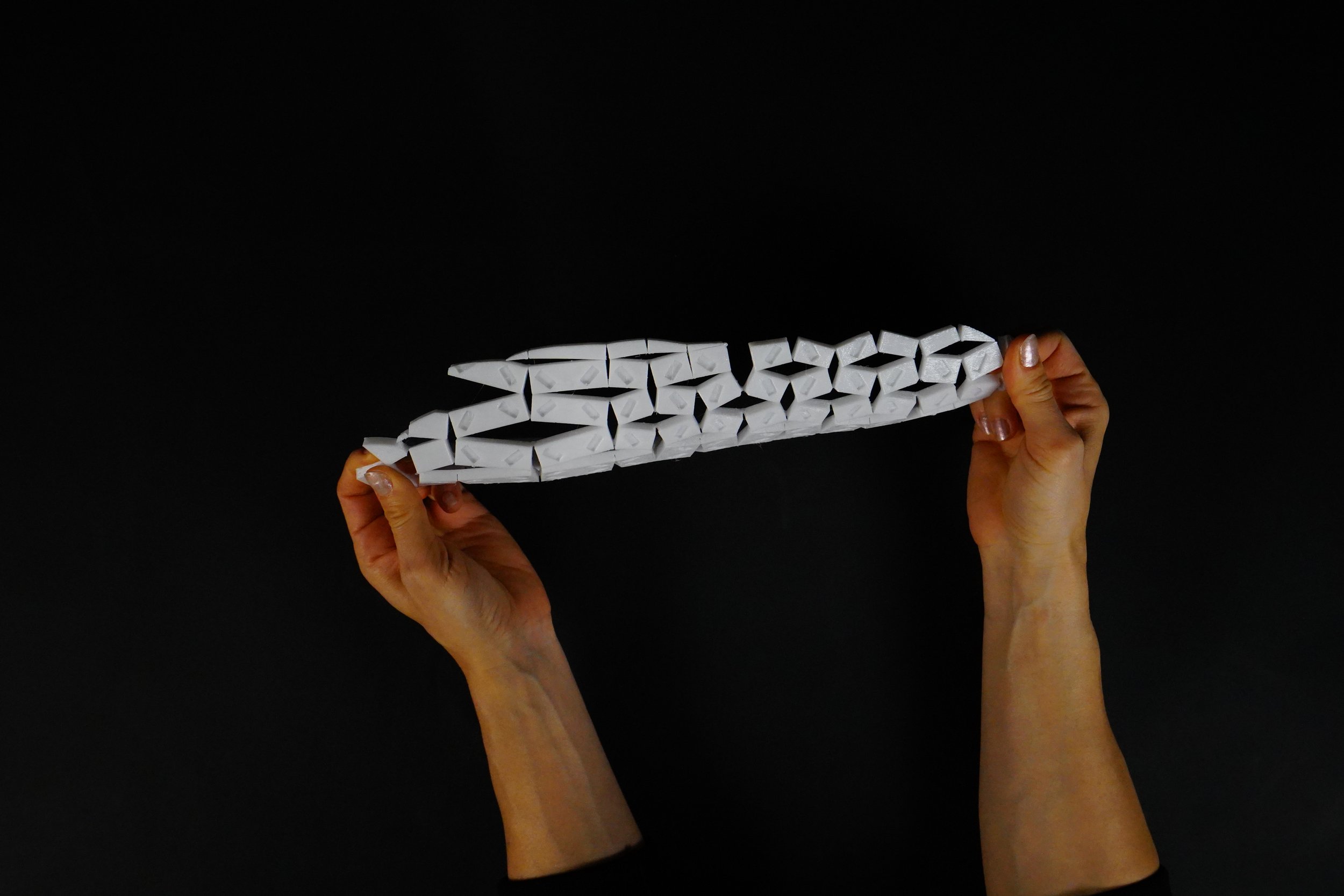
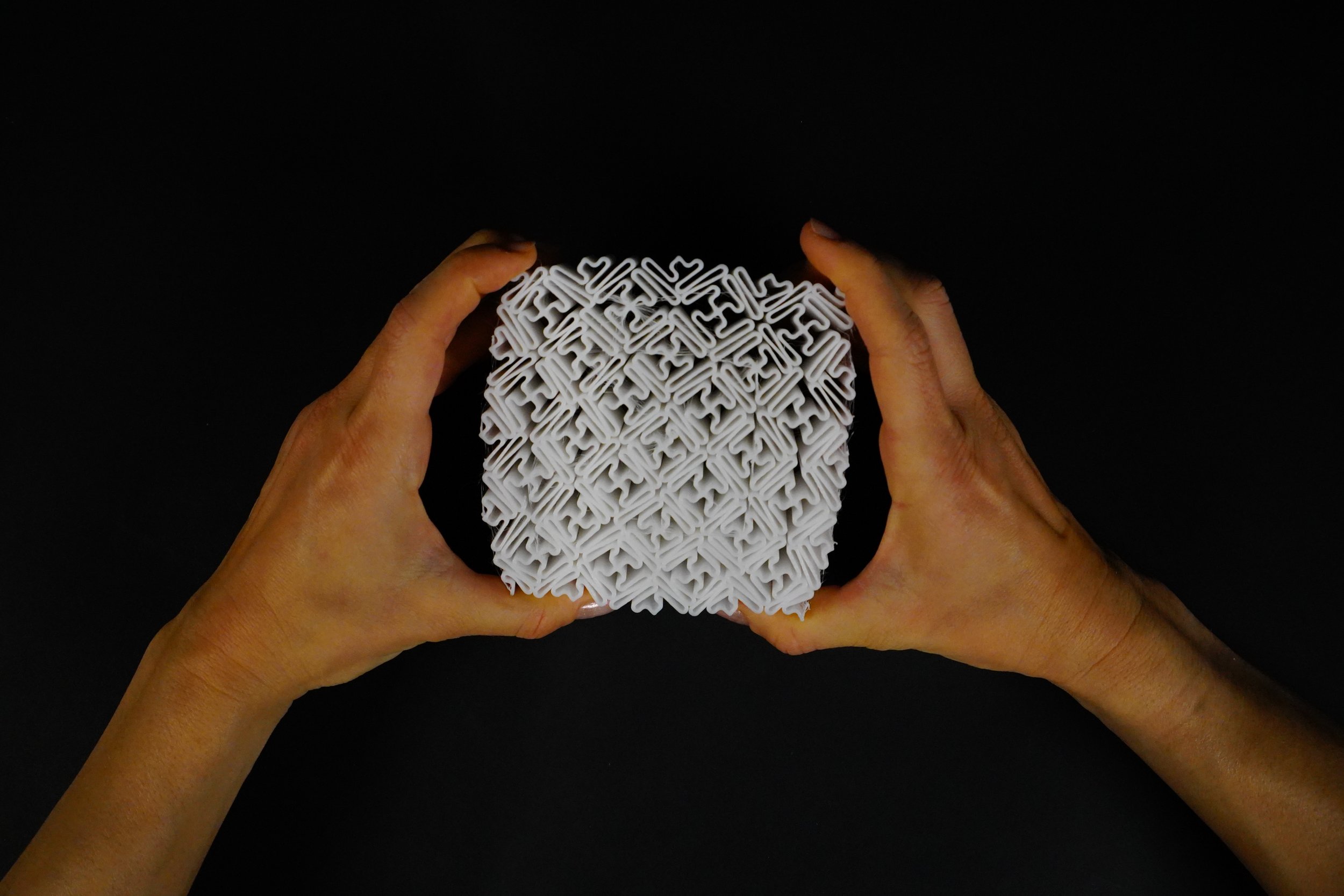
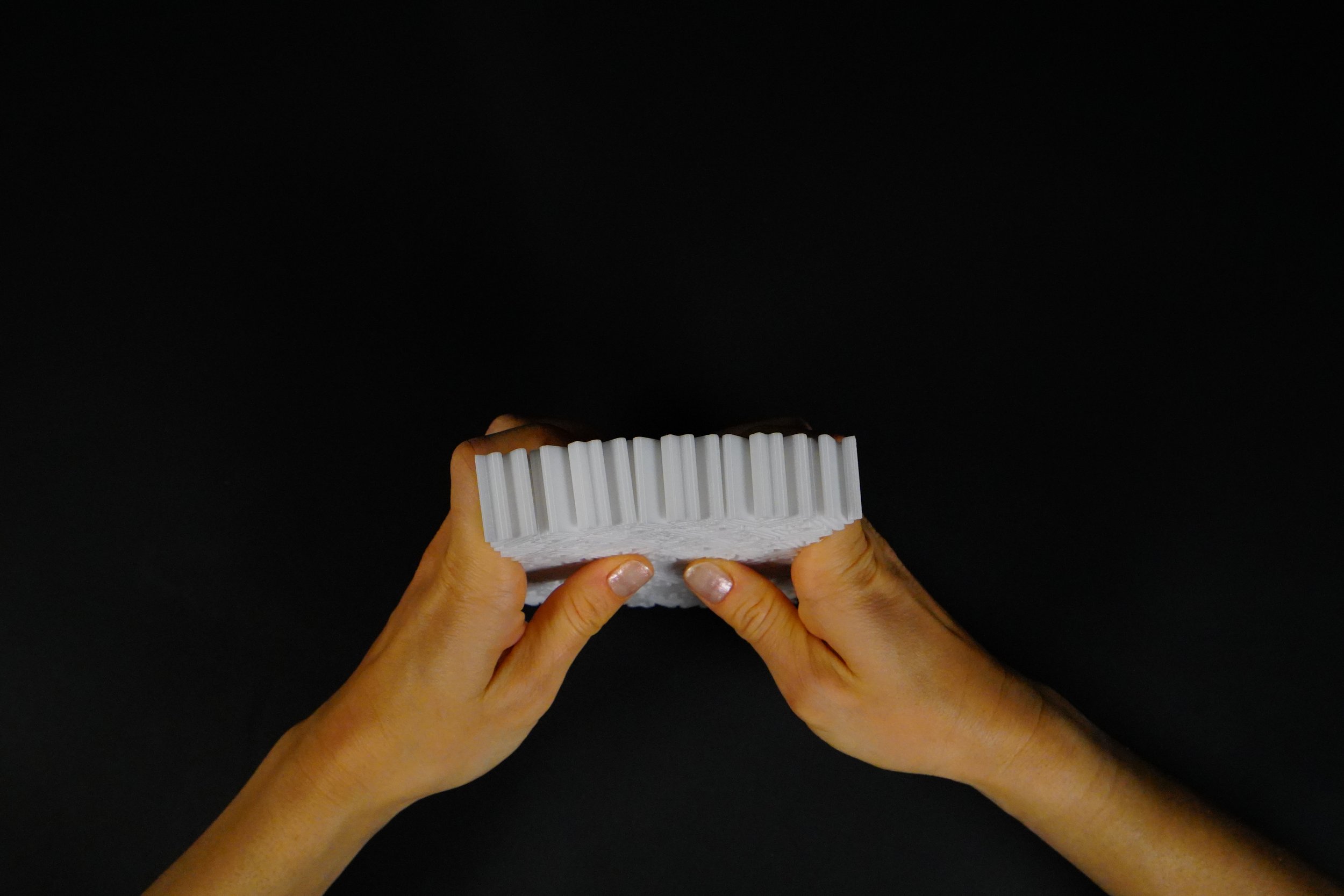
Our first experiment explores magnetized auxetic geometries, structures that expand laterally when stretched, to enable disassemblable joints between semi-soft polymers and textiles. We focus on high-impact, hard-to-recycle products like furniture and footwear, where multi-material construction makes separation nearly impossible.
By varying the cell sizes of the auxetic patterns computationally , adaptive, doubly curved surfaces that conform to complex geometries can be generated and fabricated easily. The method involves casting a mixture of semi-soft polymers and initially unmagnetized NdFeB particles into auxetic geometries. These particles can be magnetized using external electromagnets and subsequently behave as permanent magnets. By controlling the direction of magnetization, we can program the auxetic geometries to respond to targeted magnetic fields. This kinetic behavior allows for automation of the joinery of multi-material products.
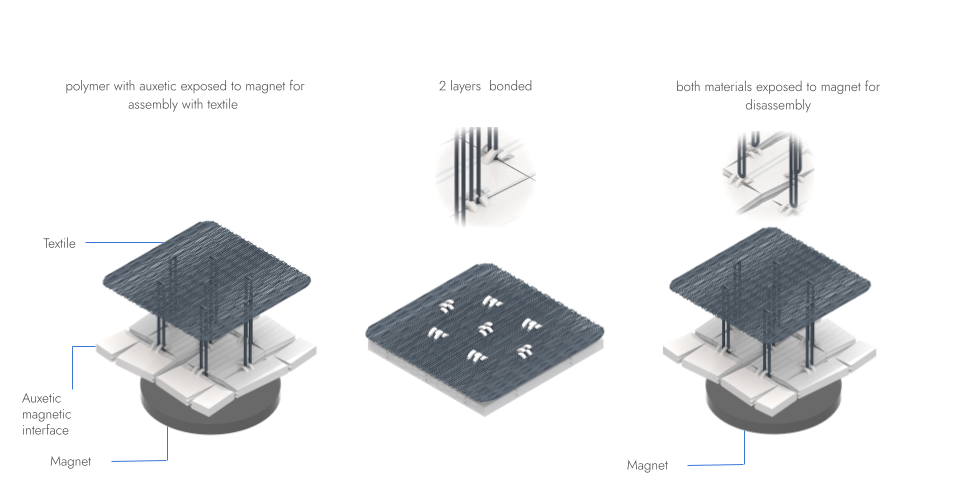
These geometries are designed computationally, along with the textile assemblies, creating a system of disassemblable building blocks.
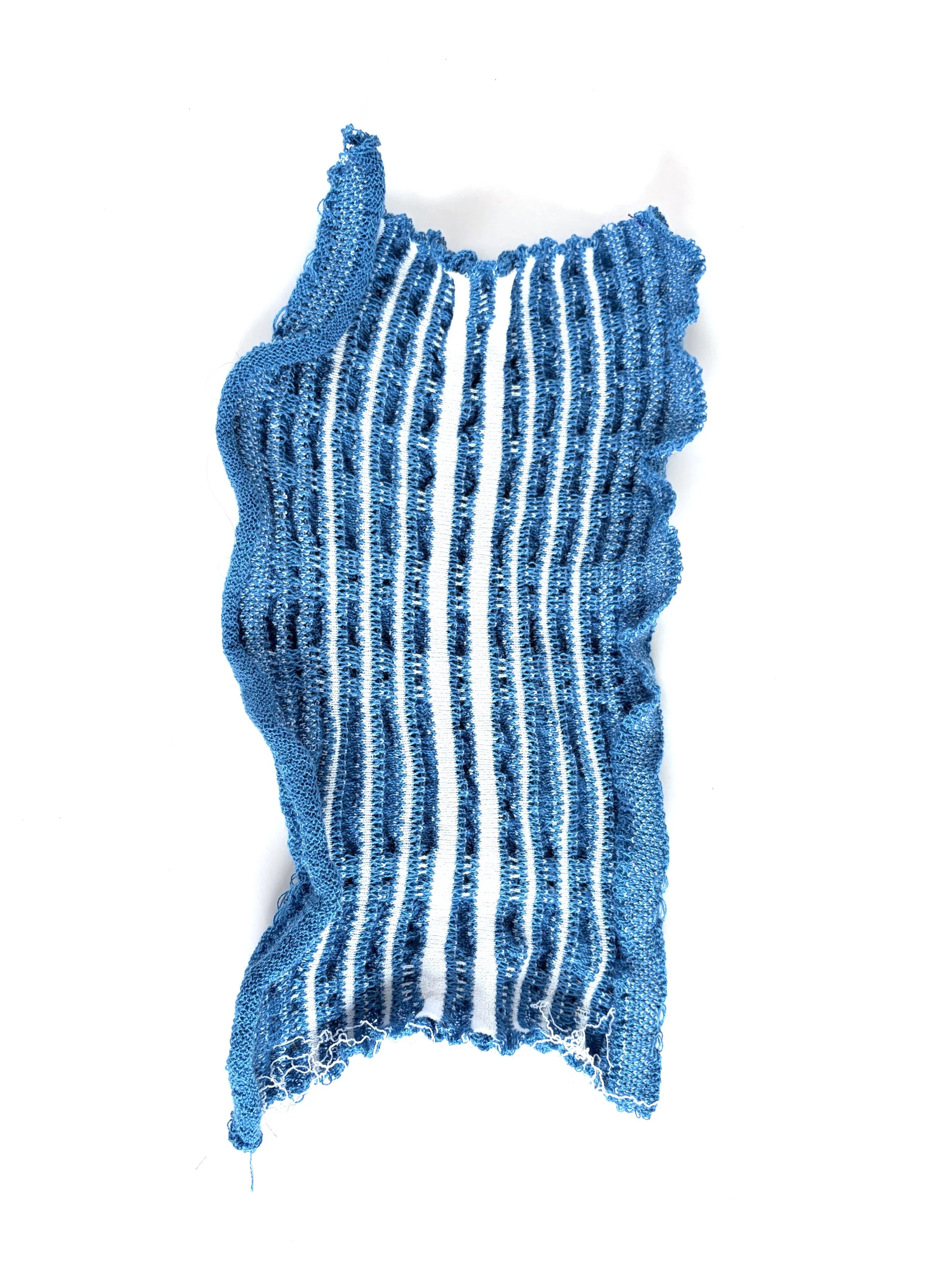
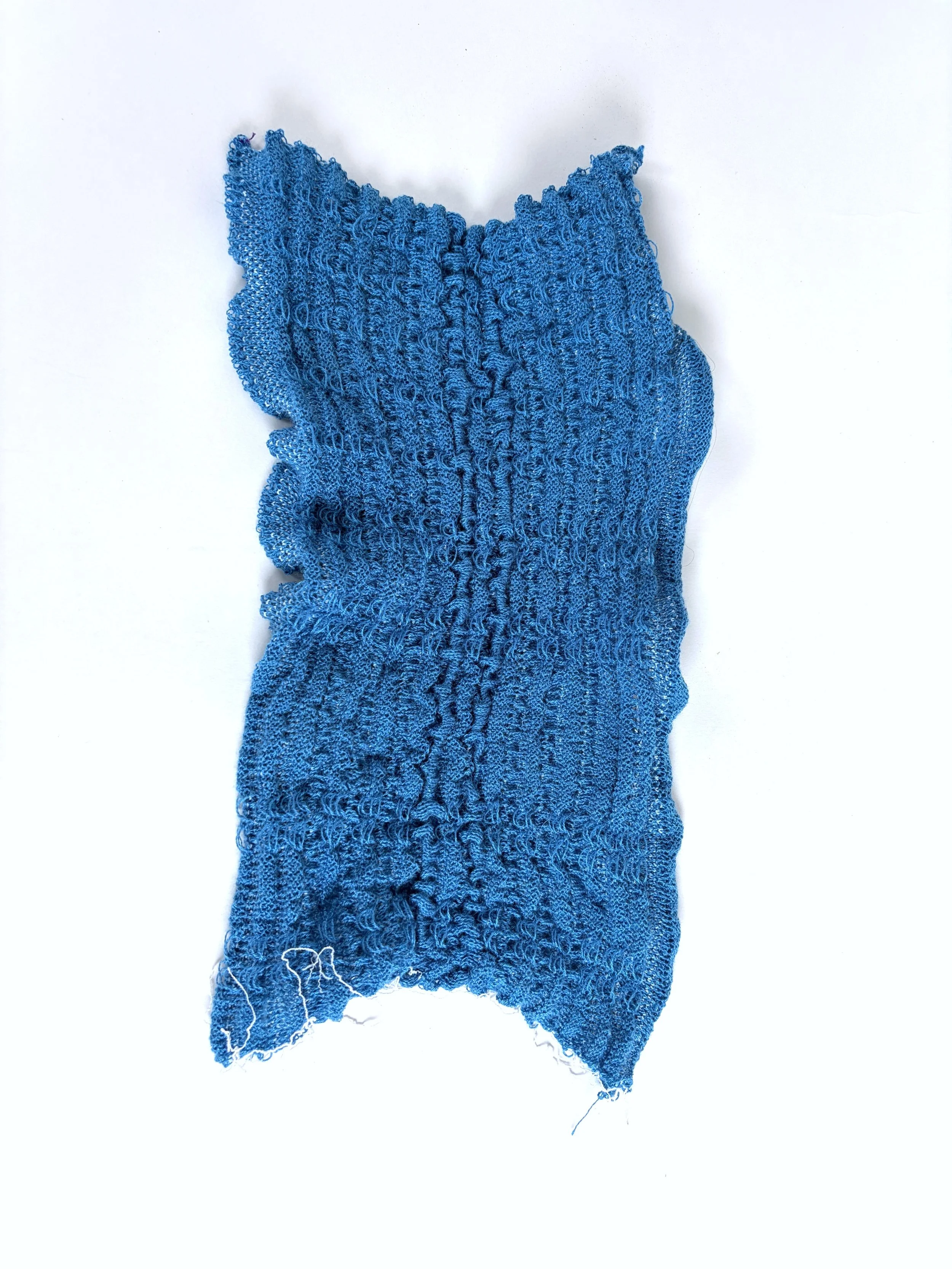
We foresee applications of this technology in joint methods between hard-to-semi-soft surfaces and textiles, including products such as shoes, furniture, automotive interiors, and other transportation systems, as well as in areas where adaptable curvature is critical, such as wearables and medical applications.
Imagine a future where products are designed with a disassembly process that is broadly applicable across materials and scales, where separation is not improvised at the end of a product’s life, but embedded from the beginning.