







Programmable Assembly for Disassembly, investigates how multi-material objects can be designed for controlled separation for renewability or reuse. While many “sustainable” products emphasize biodegradable materials, their hybrid assemblies often make recycling impossible; shoes, for instance, are notoriously difficult to disassemble. My research develops design, fabrication, and material strategies that enable multi-material systems to be separated into their constituent parts, integrating disassembly as a design parameter from the outset. Departing from traditional design-for-disassembly theories, I focus on embedding responsiveness directly into the materials themselves.
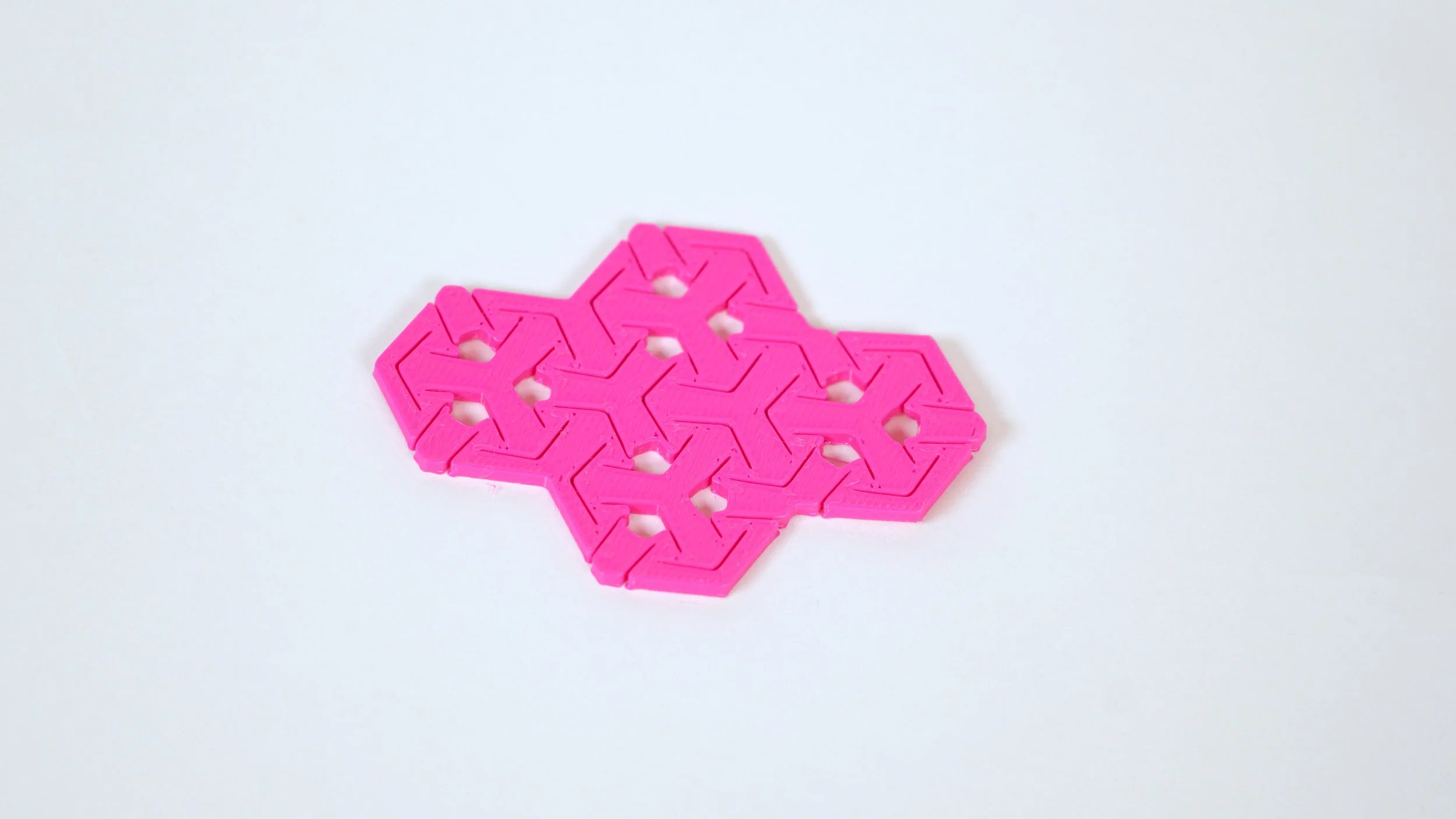
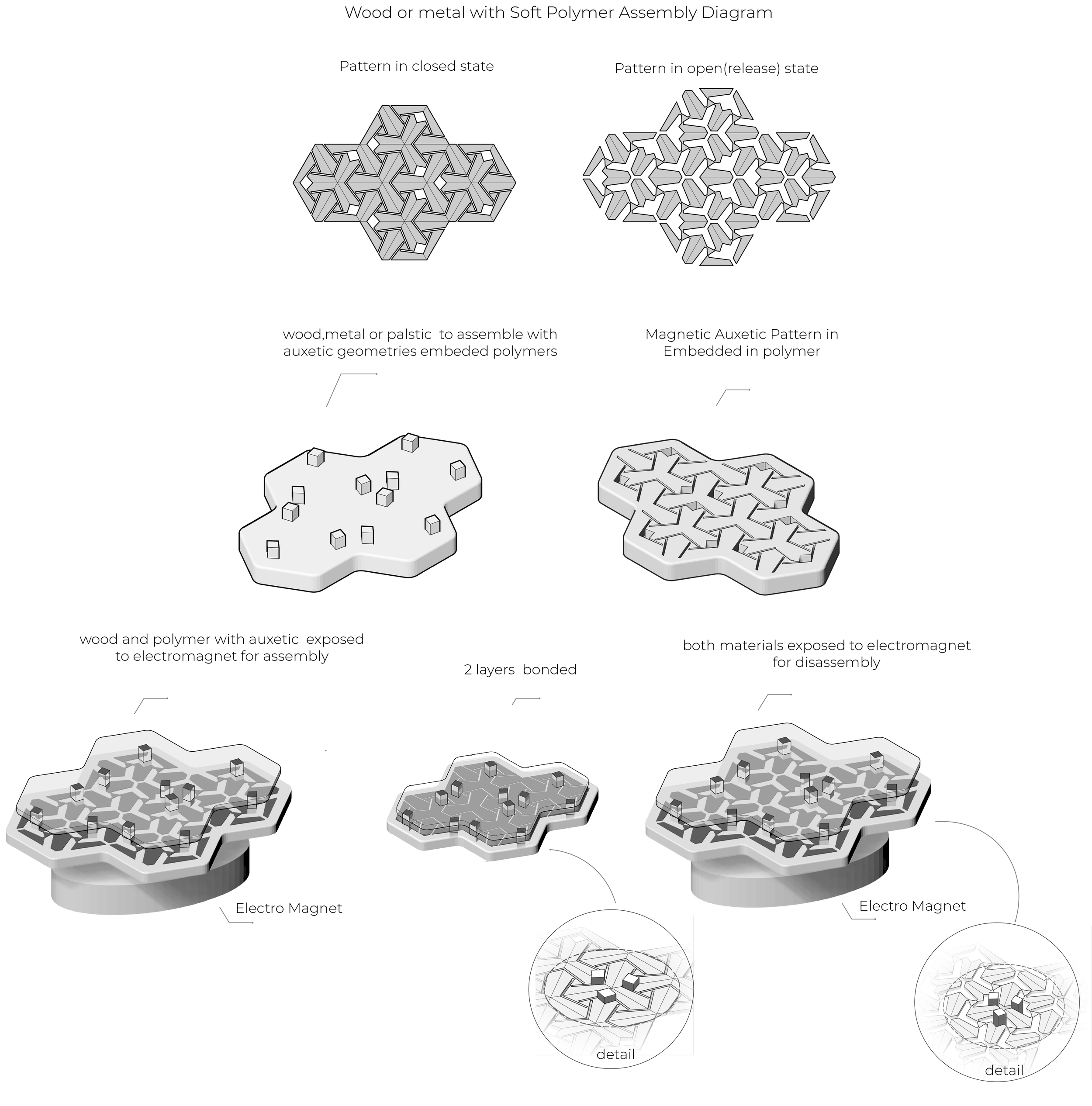
One line of inquiry explores mechanical disassembly, using magnetic particles and auxetic geometries and bimaterial prints to create joints that can detach under specific magnetic fields or forces. In parallel, I am developing disassembly methods for soft materials, such as fabrics and threads, including dissolvable threads that release upon exposure to targeted solvents, as well as new threading methods. By combining these approaches, I aim to establish a spectrum of mechanisms that enable products to be easily deconstructed at the end of their lifecycle without losing constituent materials. This work advances a circular design framework where materials are programmed to unmake themselves under defined conditions, offering a response to the limitations of today’s recycling systems.